

Understanding Anxiety: What It Feels Like, How It Affects Your Life, and What Can Help
If you've ever lain awake running through tomorrow's worries on a loop or felt your stomach drop before a meeting that hasn't even started yet, you'll know that anxiety isn't simply “being a worrier”. It's a full-bodied experience, one that can colour your thoughts, your sleep, your relationships and your sense of who you are.
In my work as a counsellor in Haslemere and Farnham, anxiety is one of the most common reasons people come to see me, whether they name it that way or not. They often arrive describing exhaustion, irritability, a racing mind, or a vague sense that something isn't right, rather than using the word “anxiety” itself.
This blog is here to help you make sense of what anxiety can look and feel like, the impact it can quietly have on day-to-day life, and some gentle, practical ways to ease the turmoil, along with a few things that are worth avoiding.
What Anxiety Can Look Like
Anxiety doesn't show up the same way for everyone, which is part of why it can be so confusing to live with. For some, it's loud and physical. For others, it's quiet and persistent, almost background noise that's been there so long it feels normal.
Some of the most common signs I see in clients include:
- A racing or overactive mind, often jumping between worries without settling on any one of them
- Difficulty switching off, particularly at night, leading to poor or disrupted sleep
- Muscle tension, especially in the jaw, shoulders, or stomach
- Restlessness, or the opposite, feeling frozen and unable to start tasks
- Irritability or snapping at people you love, often followed by guilt
- Avoidance of situations, people, or conversations that feel too much
- A constant low hum of dread, even when nothing specific seems wrong
- Physical symptoms such as a racing heart, nausea, shortness of breath, or dizziness
It's worth saying clearly: anxiety is not a character flaw, and it isn't a sign that you're “too sensitive” or not coping as well as everyone else. It's your nervous system doing its job, just rather too enthusiastically, and often in response to threats that are emotional rather than physical.
How Anxiety Actually Feels
Clients often describe anxiety to me in physical terms before they describe it emotionally. A tightness in the chest. A churning stomach before a phone call. A sense of being slightly outside your own body, watching yourself get through the day.
Underneath that, there's frequently a feeling of being on guard, as though something is about to go wrong, even when there's no clear reason why. This is your body's fight, flight, or freeze response, which is designed to protect you from danger. The trouble is, this system can't always tell the difference between a genuine threat and a difficult email, a tense conversation, or an unresolved worry from years ago.
Anxiety can also feel lonely. Many people become very good at hiding it, appearing calm, capable, and together on the outside, while privately feeling overwhelmed. This is sometimes called high functioning anxiety, and it's something I write about often, because it so easily goes unnoticed by everyone, including the person experiencing it.
The Anxiety Cycle
One of the most helpful things to understand about anxiety is that it tends to feed itself. A trigger leads to anxious thoughts, which create physical sensations in the body, which often lead to avoidance or safety behaviours, such as escaping a situation or seeking reassurance. This brings short term relief, but that relief quietly teaches the brain that the original threat was real, which strengthens the cycle rather than breaking it.
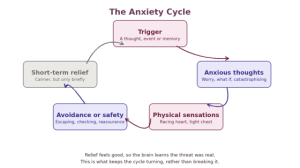
Recognising this pattern in yourself is often the first step towards interrupting it. You are not failing by feeling anxious; you are caught in a loop that your nervous system has learned, and loops that are learned can also be unlearned.
The Impact Anxiety Can Have on Your Life
Left unaddressed, anxiety has a way of quietly reshaping a life. It rarely announces itself loudly; it tends to creep in at the edges.
On your body
Chronic anxiety keeps your stress hormones, adrenaline and cortisol, elevated for longer than they're meant to be. Over time, this can contribute to fatigue, headaches, digestive problems, a weakened immune system, and difficulty sleeping properly even when you finally get the chance to.
On your relationships
Anxiety can make us irritable, withdrawn, or overly in need of reassurance, none of which we mean, but all of which can put strain on the people closest to us. Some people become quieter and more avoidant; others become more controlling, trying to manage every variable to feel safe.
On your work and decisions
Anxiety often shows up as procrastination, perfectionism, or an inability to make decisions for fear of getting it wrong. Many of my clients are highly capable professionals who appear entirely in control, while privately second guessing every email they send.
On your sense of self
Perhaps the most insidious impact is on identity. Over time, anxiety can convince you that this is simply “who you are”, rather than something you are experiencing. That's an important distinction, because it means change is possible.
What Can Help Ease the Turmoil
There is no single switch that turns anxiety off, and anyone promising an instant fix is worth treating with caution. What does genuinely help is a combination of small, repeatable practices and, often, the support of talking to someone.
Slow your breathing, on purpose
When anxious, your breathing becomes shallow and quick, which feeds the feeling of panic. Slowing it down, even artificially, signals safety to your nervous system. Try breathing in for four counts, holding for four, and out for six. A longer exhale than inhale is what does the real work.
Notice the early signs
Anxiety is often easier to manage before it escalates. Learning to notice your own early warning signs, a tight jaw, a racing thought, a particular feeling in your stomach, gives you the chance to respond before things build. Keeping a note of your triggers and patterns can help here. It's also worth noticing the unhelpful thoughts that creep in alongside them; anxiety has a way of convincing us things are worse than they really are, so it can help to ask yourself whether a thought is actually true, what the evidence is for and against it, and whether there's a more balanced way to see it.
Ground yourself in the present
Anxiety lives in the future, in the “what if”. Grounding techniques, such as naming five things you can see, four you can hear, and three you can feel, bring your attention back to the here and now, where you are actually safe.
Move your body
Movement, even a short walk, helps process the stress hormones your body has produced. It doesn't need to be intense exercise; gentle, regular movement is often more sustainable and just as effective. Time outdoors, in particular, can make a real difference to how anxiety feels day to day.
Look after the basics
Sleep, food and substances all quietly shape how anxious we feel. Anxiety can make sleep tricky, but a good night's rest gives you the energy to face challenges, so it's worth protecting where you can. Balanced meals help too; cutting back on caffeine in particular can make a noticeable difference during an anxious period. Alcohol and recreational drugs might feel like they help in the moment, but they tend to make anxiety worse once they wear off.
Try complementary approaches
Things like yoga, meditation, massage, reflexology, or hypnotherapy can all help some people feel calmer. It's worth trying a few to see what resonates with you, alongside the more direct techniques above.
Talk to someone
Anxiety thrives in isolation and silence. Sometimes just talking to someone you trust, a friend, a family member, or a counsellor, makes a real difference; sharing what's weighing on you often brings clarity and makes things feel more manageable. Talking it through in counselling goes a step further, helping you make sense of what's driving your anxiety, rather than simply managing the symptoms on the surface. In our work together, I help clients explore what their anxiety might be trying to tell them, and find calmer, steadier ways of moving through life.
What's Worth Avoiding
Just as important as what helps is what tends to make anxiety worse, even when it feels comforting in the moment.
- Avoiding the things that frighten you altogether, as this can shrink your world and reinforce the anxiety rather than easing it
- Relying on alcohol to switch off; it may feel calming briefly, but it disrupts sleep and increases anxiety the next day
- Endless scrolling, sometimes called doomscrolling, as feeding your mind a constant stream of worry inducing content rarely settles an anxious system
- Trying to think your way out of it, as anxiety is a felt, bodily experience, and it often needs a bodily response, not just logic
- Telling yourself you “should” be coping better, as self criticism adds shame on top of an already difficult feeling, and rarely motivates lasting change
- Suffering in silence for too long, as the longer anxiety goes unaddressed, the more entrenched the patterns around it tend to become.
Be Gentle With Yourself
Managing anxiety isn't about getting rid of it completely; it's about finding ways to live alongside it, and gradually loosen its grip. Be kind to yourself, celebrate the small wins, and remember that you're not alone in this
You Don't Have to Manage This Alone
If what you've read here feels familiar, please know that anxiety, however it shows up for you, is one of the most common and human experiences people bring into the counselling room. It doesn't mean you're broken, weak, or failing. It means your nervous system has been working overtime, and it would benefit from some support.
As a counsellor based in Haslemere and Farnham, and working online across the UK, I offer a warm, non judgemental space to explore what's underneath your anxiety and find your own way towards feeling calmer, steadier, and more in control again. There's no pressure, and no expectation that you'll have it all figured out before you arrive.
You're welcome to get in touch for a free initial consultation, or take a look at session details and fees to see how we might work together.
Find Support Through Counselling
If anxiety is affecting your sleep, relationships, or sense of yourself, counselling can help you explore it safely and at your own pace.
Sessions available in Haslemere and Farnham, Surrey, or online.